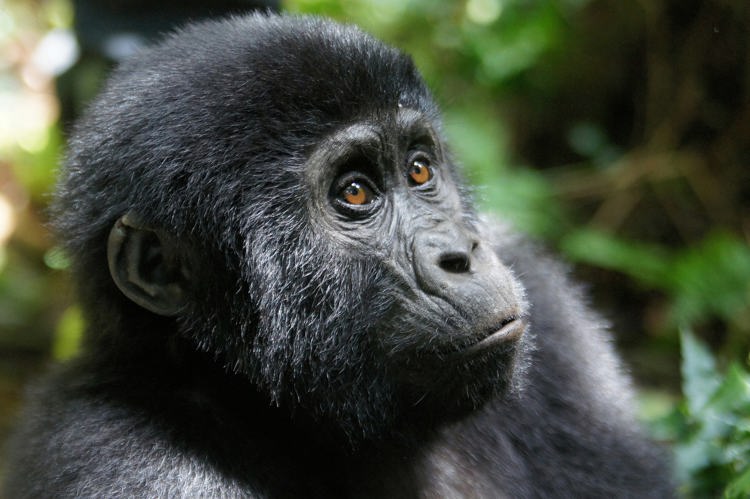
Gorilla & chimpanzee trekking vs habituation: what's the difference?
For many people travelling to Uganda, meeting gorillas or chimpanzees in the wild is what they look forward to the most. It’s one of those rare experiences that stays with you long after your trip ends.
But once you start planning, you’ll notice there isn’t just one type of permit. In both Uganda and other parts of East Africa, you can often choose between a trekking experience and a habituation experience. They sound similar, but in practice, they are quite different. Both in pace and in depth. So which one suits you best?
Let’s break it down: for both gorillas and chimpanzees.
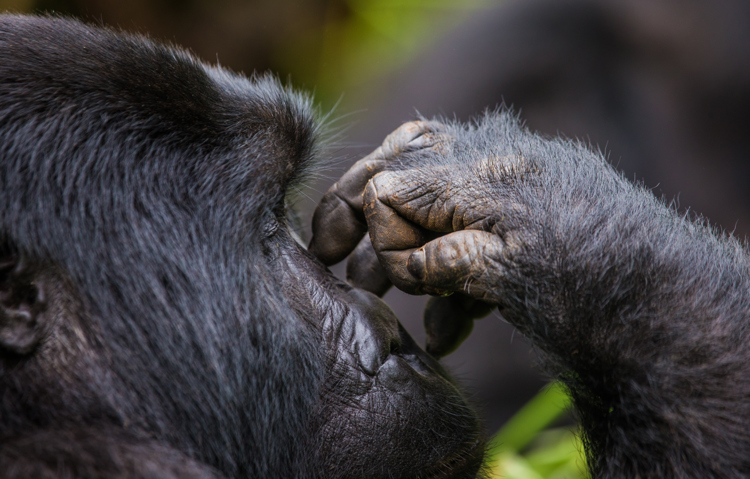
Gorillas
1. Gorilla trekking: a once-in-a-lifetime encounter
A gorilla trekking experience is the best-known way to see mountain gorillas in the wild.
Your day starts early. Together with experienced rangers, you walk into the rainforest, following fresh tracks and listening for signs of movement ahead. The trek can be short and steady, or longer and more demanding, depending on where the gorilla family is that day.
Once you find the gorillas, you are allowed one precious hour with a fully habituated family. These gorillas are used to human presence, so they continue their daily life while you observe: mothers grooming their young, juveniles playing, a silverback calmly keeping watch. The encounter is intimate, emotional and surprisingly quiet.
What to expect:
- A trek ranging from 30 minutes to several hours
- One hour with the gorillas
- Strict rules to protect both gorillas and visitors
- A relatively short but powerful experience
Gorilla trekking is a good choice if you have limited time, or if this is your first primate encounter. The time with the gorillas is limited, but the impact often isn’t.
2. Gorilla habituation experience: a deeper look behind the scenes
Instead of visiting a fully habituated family, you join researchers and rangers who are working with a group that is still getting used to human presence. This is part of a long and careful conservation process, where trust is built slowly and respectfully.
Instead of one hour, you can spend up to four hours with the gorillas. You’ll see more unpredictable behaviour, learn how researchers identify individuals, and witness how trust between humans and gorillas is slowly built.
The experience feels less like a visit and more like being part of the fieldwork.
What makes it different:
- Up to four hours with the gorillas
- A stronger focus on research and conservation
- Behaviour that can be more cautious or dynamic
- A longer, often more physically demanding day
This experience is for you if you’re curious about what happens behind the scenes. If you don’t just want to see gorillas, but also understand how conservation really works on the ground. Do note that habituation requires patience, time, and a reasonable level of fitness.
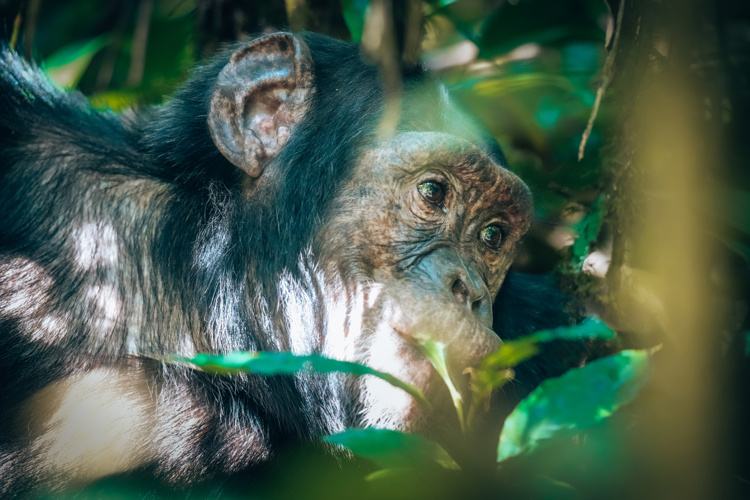
Chimpanzees
1. Chimpanzee trekking: fast-paced and energetic
Chimpanzee trekking has a very different rhythm from gorilla trekking. Where gorillas often sit and observe, chimps are usually on the move. They climb, call to each other, chase, feed and disappear through the forest before you fully realise what’s happening.
The trek can feel a bit like hide-and-seek. Once you find the group, you’ll typically spend around one hour observing them as they go about their day, often high up in the trees.
Expect:
- A dynamic trek that can be physically active
- Loud calls echoing through the forest
- Chimps constantly moving, often high above you
- A more “wild” feeling overall
If you enjoy a bit of action and don’t mind that sightings can be fleeting, chimpanzee trekking is the right experience for you.
2. Chimpanzee habituation experience: spending a day in their world
A chimpanzee habituation experience is intense, in the best possible way.
Your day starts early, often before the forest fully wakes up. Together with rangers and researchers, you head out to find the chimpanzee community at their nesting site. From there, you follow them as they begin their day: feeding, travelling from nest to nest, interacting and sometimes disappearing into thick vegetation.
You’ll observe behaviours that are rarely seen on a standard trek: hunting, tool use, and complex social interactions. It’s raw, educational and physically more demanding.
Key differences:
- Several hours (often a half or full day) with the chimps
- Early starts and long walks
- A deeper understanding of chimp behaviour
- Less predictability, more room for adventure
This option suits you if you are genuinely fascinated by primates, curious, patient and don't mind mud on your boots.
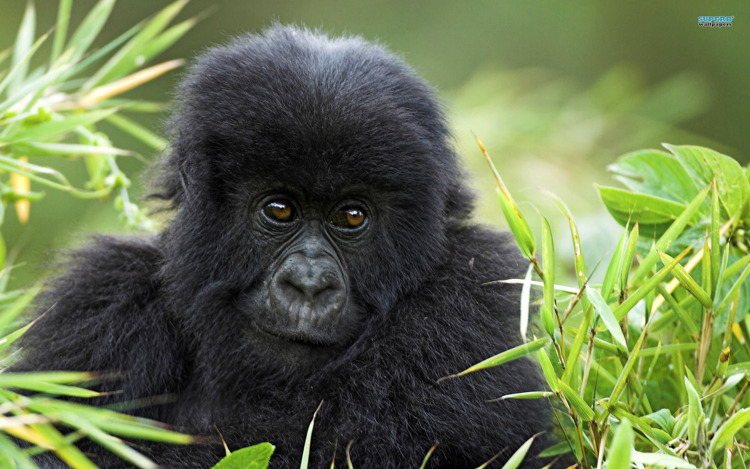
So… trekking or habituation?
There’s no right or wrong choice. Only what fits your travel style.
Choose trekking if you:
-
Have limited time
-
Want a memorable but manageable experience
-
Prefer a well-structured activity
Choose habituation if you:
-
Love immersive, educational experiences
-
Are physically fit and patient
-
Want to see conservation in action
One thing is guaranteed: spending time with gorillas or chimpanzees in the wild is humbling, emotional and deeply grounding. It’s a reminder that, in the heart of the forest, we are visitors. And very lucky ones at that.
Frequently asked questions about chimpanzee & gorilla experiences
1. Where in Uganda can I do a gorilla or chimpanzee experience?
For gorillas, there are five trekking locations: four in Bwindi National Park and one in Mgahinga Gorilla National Park. Bwindi protects an estimated 350 mountain gorillas, including 11 habituated groups that can be tracked. At Rushaga (one of Bwindi's trekking locations), we partner with the beautiful Mutanda Lake Resort.
If you want to go for a chimp experience, then Kibale Forest is your prime trekking location (95% chance of spotting a chimp). If you're travelling on a budget, Budongo Forest, Kalinzu Forest, or Kyambura Gorge are cheaper alternatives to spot chimpanzees (but with lower chances).
2. What is the minimum age for gorilla or chimpanzee trekking?
The minimum age for a gorilla hike in Uganda is 15 years. For chimpanzee trekking, you'll need to be at least 12 years old.
3. What should I wear for gorilla or chimp trekking?
We recommend you wear good and comfortable walking/hiking shoes (suitable for handling slippery slopes), and long-sleeved clothes (to protect yourself from scratches and insect bites). Thin gloves can be a great addition, as well as a raincoat and a facemask (mandatory to wear once you are with the primates).
4. Is gorilla or chimp habituation worth the higher permit cost?
For chimpanzees, the price difference between trekking and habituation is relatively small. For gorillas, the gap is much bigger. So is it worth paying more?
That really depends on what kind of experience you’re after. If you’d like to spend more time with the animals and learn more about research and conservation work, habituation can be very rewarding. You join rangers and researchers and get a deeper look behind the scenes. If you’re mainly looking for a powerful wildlife encounter, a regular trek is often more than enough. One hour with gorillas or chimps in the wild already leaves a strong impression. You can find the most recent permit prices in our blog about park fees in Uganda.
5. Can I combine gorilla and chimpanzee experiences in one trip?
Yes, many travellers combine both. They offer very different experiences and complement each other well. Take a look at our sample itineraries, and pick a self-drive that fits you the most.
6. How fit do I need to be for either experience?
When it comes to trekking, a moderate fitness level is enough. People of various ages go trekking, including those in their seventies. A porter can assist, as well as a walking stick. The right clothing and boots with traction will make the experience easier, too. Habituation experiences require more stamina, but a moderate fitness level is sufficient.
7. Do I need to book permits in advance?
Yes, we strongly recommend booking your permits well in advance. Gorilla and chimpanzee permits are limited and issued by the Uganda Wildlife Authority to registered tour operators only. It’s not possible to arrange them yourself as a visitor.
We’re happy to secure the permits for you once your self-drive tour or car rental in Uganda is confirmed. You can request this easily by filling out our booking form and indicating that you would like us to arrange the permits for you.
More questions?
Send us a message! We're happy to help you arrange the experience of a lifetime in Uganda.