How much does travelling in Tanzania cost?
Travelling in Tanzania can be surprisingly affordable, but your total budget depends a lot on how you travel. National park fees, accommodation style and transport choices all make a big difference.
On this page, you’ll find a realistic overview of travel costs in Tanzania, including accommodation, camping, food, fuel, park fees and daily budgets for self-drive travel. The estimates are based on the routes and travel styles we see most often at Roadtrip Africa.
What is a realistic daily budget for Tanzania?
Your travel budget in Tanzania depends mainly on four things:
Whether you camp or stay in lodges
How many national parks you visit
Whether you travel independantly or with a guide
If you travel in high or low season
Travel style | Average budget pp/day |
Budget travel | USD 110 - 250 |
Mid-range self-drive trip | USD 250 - 350 |
Higher-end safari travel | USD 350+ |
These estimates include accommodation, transport, food and park fees. International flights are usually not included.
At Roadtrip Africa, we base these numbers on real self-drive trips through Tanzania, including popular routes around Serengeti, Ngorongoro and Zanzibar.
Is Tanzania expensive for safari travel?
Yes, Tanzania is one of the more expensive safari destinations in Africa, mainly because of national park fees and accommodation inside the parks. Places like Serengeti and Ngorongoro are world-famous safari destinations, and prices reflect that.
That said, your total budget depends a lot on how you travel. A self-drive safari with camping is much more affordable than a fully organised luxury safari.
Outside the national parks, Tanzania is generally reasonably priced for food, local transport and accommodation.

How much do accommodation and lodges cost?
Accommodation prices in Tanzania vary widely depending on location and comfort.
As a general guideline for lodges inside the parks (double room with breakfast):
Type of stay | Average price per night |
Budget | Up to USD 150 |
Mid-range | USD 150 - 400 |
High-end | USD 400+ (usually full board) |
Looking to save money?
Accommodation outside the parks is much cheaper. You’ll find plenty of guesthouses and mid-range hotels at lower rates, without sacrificing comfort.
How much does camping cost in Tanzania?
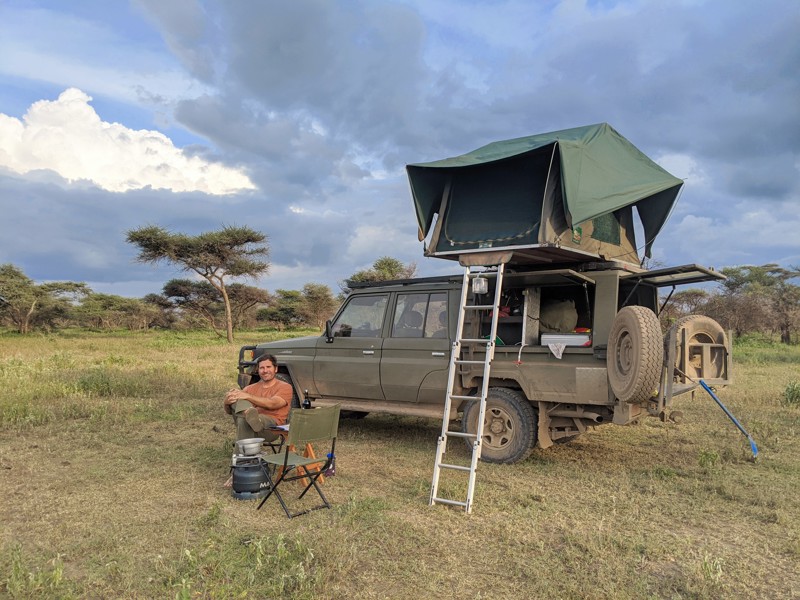
Camping is one of the best ways to lower your travel budget in Tanzania, especially during a self-drive safari.
Campsite prices usually range between USD 20 and USD 80 per night, depending on the type of campsite (public, private or special) and the location (inside or outside a national park, for example).
At Roadtrip Africa, we offer fully equipped camping gear for travellers who want more flexibility and lower accommodation costs during their road trip through Tanzania.
What do food and drinks cost in Tanzania?
Food in Tanzania can be very affordable, especially when eating local meals.
Typical prices are:
Item | Average price |
Local meal | USD 3 - 8 |
Dinner at a tourist lodge | USD 15 - 30 |
Beer | USD 2 - 4 |
Soft drink | USD 1 - 2 |
Bottled water | USD 0.50 - 1 |
A 10% tip is generous and always appreciated. Most places share tips among all staff, so if the service made you smile, don’t hold back.

How expensive are fuel and transport?
Fuel is a big cost during a self-drive safari because distances in Tanzania are long.
Petrol and diesel prices are usually around:
The total fuel budget depends on your route and vehicle. A Northern Circuit road trip with Serengeti and Ngorongoro often requires several hundred kilometres of driving.
For travellers who prefer not to drive themselves, Roadtrip Africa also offers driver-guides for around €60 per day.
What are Tanzania's national park fees?
National park fees are one of the biggest travel expenses in Tanzania.
Examples of current entrance fees (May 2026):
National park | Entry fee |
Serengeti | USD 82.60 |
Tarangire | USD 59 |
Lake Manyara | USD 59 |
Ngorongoro Conservation Area | USD 70.80 |
Ngorongoro Crater fee | USD 295 per vehicle |
Additional fees may apply for:
Camping
Ranger services
Night drives
Walking safaris
Park fees are usually charged per person per 24 hours. For a full overview of entrance fees for Tanzania's National Parks, head to the National Parks guide on our website.

Can you travel Tanzania on a budget?
Yes, but it helps to plan carefully.
The easiest ways to reduce costs are:
Camping instead of staying in lodges
Limiting the number of safari parks
Travelling outside peak season
Self-driving instead of booking a private safari pacakage
Spending more time outside the Northern Circuit
Tanzania is not a classic backpacker destination, but as an independent traveller you can still keep costs manageable by making smart choices.
How much cash should you bring to Tanzania?
Heads-up: Tanzania is a cash-based economy
While you can pay park entrance fees by credit card, almost everything else is cash only.
Cash is especially important for:
Smaller towns
Fuel stations
Tips
Village fees
Ranger fees
Local markets
We recommend bringing some Euros or US Dollars in cash for the unexpected. You can exchange them easily at a Forex Bureau in most towns. Only notes printed after 2009 are accepted.
Some remote areas have unreliable card terminals or weak internet connections, so having backup cash is important.

Do credit cards work in Tanzania?
Credit cards work in many hotels, lodges and tourism businesses, especially in larger towns and safari areas.
However:
Card payments may include extra transaction fees
Internet connections can fail
Some park fees and ranger fees require cash
Remote regions may not accept cards at all
Visa cards are generally accepted more often than Mastercard. It's always wise to carry some cash as backup.
ATMs & banks
You’ll find ATMs in larger towns. The most reliable banks are Stanbic, Standard Chartered, Barclays, and CRDB – they accept Maestro, Visa, and Mastercard. Pro tip: Daily withdrawal limits apply, so it’s smart to carry more than one card.
Money-saving tips for self-drive travel in Tanzania
Travelling independently already saves money compared to private safari packages. These additional tips can help lower your costs even more:
Camp instead of staying in safari lodges
Combine expensive parks with cheaper parks like Tarangire and Usambara
Travel in low season, prices drop 25-50%!!
Eat local instead of at an upmarket lodge or beach resort
Share fuel costs with travel companions
Plan realistic driving distances to avoid unnecessary fuel use
Buy drinks and snacks at local markets before entering safari parks
Stay longer in one area instead of rushing across the country
Use a smaller vehicle like the Suzuki Escudo if your route allows it
Book through experienced local specialists to avoid unnecessary permit mistakes or extra fees
At Roadtrip Africa, we regularly help travellers balance budget, comfort and route planning for self-drive safaris in Tanzania. Need a hand?
Get in touch with our Tanzania experts